Glass, Polycarbonate, Aluminum or Insulated: Picking a Patio Cover Material
The right roof material depends less on the catalog and more on whether the room behind it needs daylight or shade.
October 15, 2026 · 4 min read
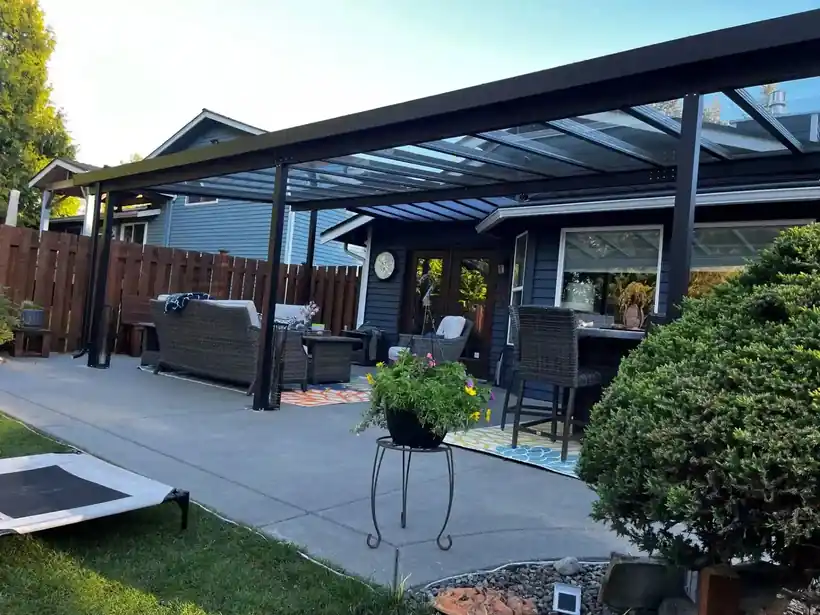
Most people start this decision by comparing materials. It works better to start with the room behind the cover. Stand at your back door in February around three in the afternoon and look at the light. If the kitchen is already dim by then, a roof that blocks daylight will make it dimmer. If the patio faces west and bakes in July, a roof that lets everything through will carry that heat right up to the slider. Puget Sound homes deal with both problems, sometimes on the same wall.
Start with what the room behind the cover needs
Patio covers fall into two camps. Some exist to keep rain off while letting light in. Others exist to make shade. Action Installations LLC, the family-owned team based in Orting, installs both kinds, and the conversation usually begins with a simple question: what's on the other side of that wall? A kitchen window that looks onto the patio wants daylight. A bedroom that gets hammered by afternoon sun wants shade. A deck you mostly use for grilling after work can go either direction.
Overcast is the baseline here. From October through May the sky over the Sound is flat and pale most days, and a cover that blocks too much of it turns a covered deck into a cave. That's the main reason the light-friendly materials get so much attention in Western Washington. It's also why a lot of homeowners are surprised by how much they care about a cover's brightness once the first gray week of November rolls in.
Glass: the most daylight, in three shades
Custom glass is what the company calls its specialty. Their description is high-end, custom-fitted glass patio covers designed around your home's layout and style, measured and planned so the cover brings in natural light while helping protect the patio from the elements. Glass comes in three shades: clear, bronze and reflective.
Clear lets in the most daylight and keeps the open feeling of looking up. Bronze takes the edge off, much like sunglasses for the patio, which can help over a south-facing wall. Reflective gives the roof a more mirrored look from outside. The shades read very differently in a brochure than they do over your own deck under a gray sky, which is a good reason to look at physical samples before you choose.
Polycarbonate: bright, lightweight, still shady
Their own words for polycarbonate are a bright, lightweight cover option that provides reliable shade and protection from the weather, without losing all of the natural light. It sits in the middle of the range. You get a roof that keeps you dry and takes the glare down, but the room behind it doesn't go dark.
One Google review shows how the materials can work together on a single house. Satendra Jain had the team design and install glass covers over a patio and entry door, plus "a polycarbonate cover on our side door." That's a sensible split. Glass goes where you want the sky and the view. Polycarbonate goes over the door you just want to keep dry while you carry in groceries.
Aluminum: clean lines and low upkeep
Aluminum covers are described by the company as low-maintenance and built to last, with a crisp, finished appearance, and a great option for clean lines, strength and long-term performance. Because the roof is solid, it's the straightforward answer when the point is dry space and steady shade rather than daylight. A deck off a garage wall, a grill station, or a side yard where nobody is looking up at the roof anyway are all natural fits.
If your home has strong horizontal lines, such as lap siding or a long eave, an aluminum cover tends to echo them rather than compete with them. That's a design observation, not a rule, but it's worth noticing when you walk around the outside of your house.
Insulated: full shade and a more enclosed feel
The company describes insulated covers as solid patio covers that create consistent shade and improved comfort underneath, ideal when you want better temperature control and a more enclosed feel. Elsewhere they say the solid roof structure helps reduce heat buildup and keeps the space more usable throughout the day.
Think of the insulated option as the one that makes the patio feel like an extra room. If you've got a west-facing deck that's too hot to sit on from three o'clock until dinner, or you want a spot that stays calm when the weather swings, a solid insulated roof is the material to put on the list first.
A quick way to match material to need
- Dim room behind the cover and long gray winters: start with glass or polycarbonate for daylight.
- West-facing patio that gets hot in summer: look at insulated or aluminum for steady shade, or bronze glass if you still want some light.
- A side door or utility entry that only needs to stay dry: polycarbonate or aluminum is usually plenty.
- A house with more than one problem: nothing says every cover on your home has to be the same material.
Whichever way you lean, the best test is seeing the actual pieces. The team brings sample pieces to the estimate, and holding glass, polycarbonate and aluminum up against your own siding and deck boards settles most of the debate in about ten minutes.
If you're weighing these four materials for a home in Orting, Tacoma, Enumclaw or anywhere else around the Puget Sound, call (253) 886-3525 and ask for a free estimate. They'll come to you, measure the space, and help you match the roof to the room.
Action Installations LLC, (253) 886-3525
Call (253) 886-3525More articles
Living Under a Patio Cover Through a Puget Sound Winter
A good cover turns the wettest months into patio months, and the upkeep is lighter than most people expect.
Carport or Garage: Covering Cars, Boats and RVs in Western Washington
For many properties in the Puget Sound area, a well-built carport does most of what a garage would do.